

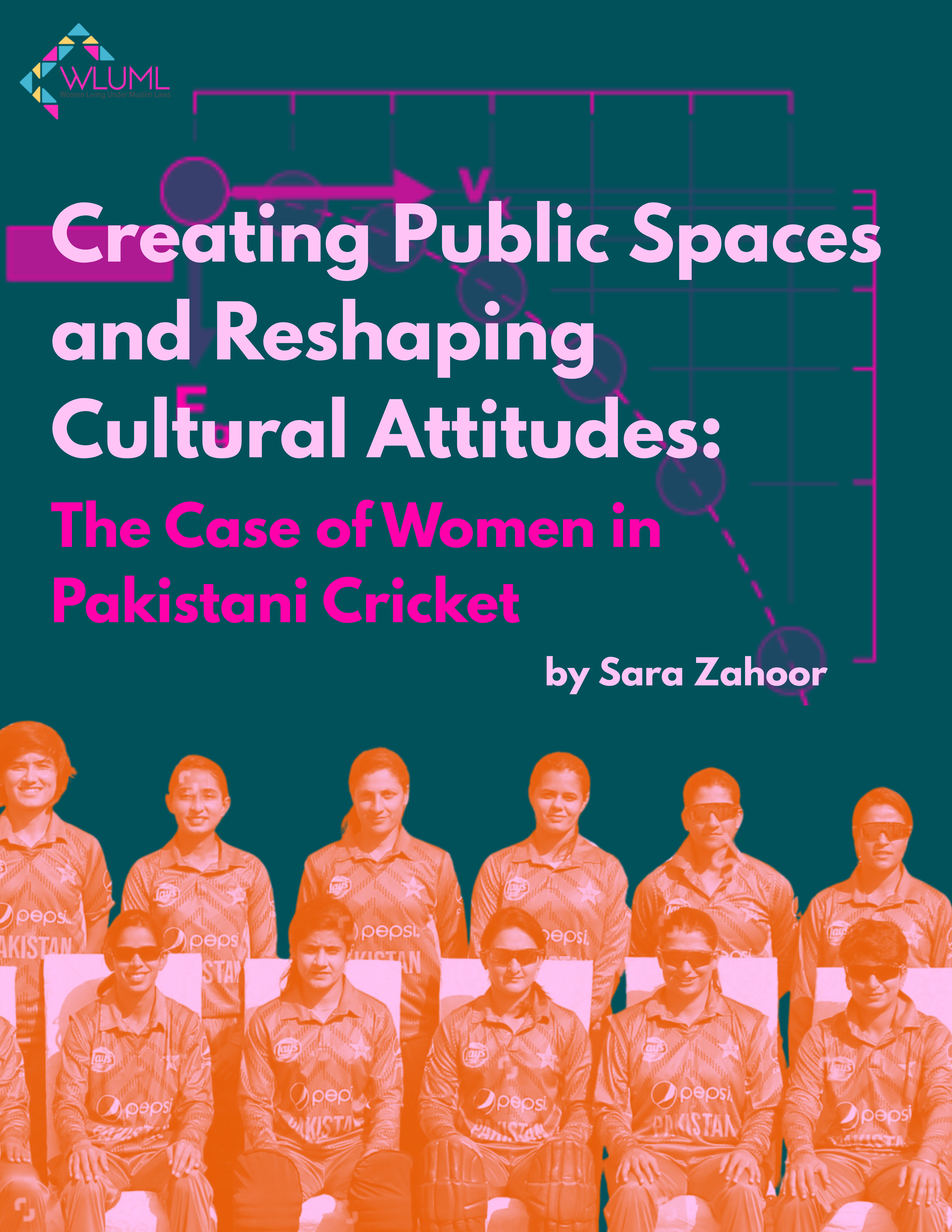
Pakistani Women Cricket team poses for a group photo prior to the final match of the three-match T20 Cricket series in Karachi, Pakistan, 03 February 2019. Shutterstock.
In societies where women’s visibility in public life has historically been restricted, creating inclusive spaces and reshaping cultural norms is not just a symbolic gesture – it’s a transformative act. This is especially true in Pakistan, where the national women’s cricket team stands as a powerful example of how challenging deep-rooted gender biases in sports can ripple into broader societal change.
Sports, particularly cricket in Pakistan, is more than recreation; it’s a marker of national pride, media attention, and opportunity. Yet for many Pakistani girls, access to the field is barred early. Discouragement often starts at home, where traditional gender roles dictate that sports are “unfeminine” or a “waste of time.” This mindset extends to school environments, local coaches, and even professional leagues that lack the infrastructure, visibility, and investment for female athletes. These obstacles are part of a larger system that restricts women’s participation in various domains – education, leadership, and public service included.
However, when women are seen and supported in public spaces like sports arenas, the effects are far-reaching. For starters, representation in national sports builds self-esteem and reinforces the idea that women can – and should – occupy competitive and leadership roles. Female cricketers like Sana Mir and Nida Dar have not only excelled on the pitch but have also served as role models for a generation of girls who may otherwise never imagine themselves beyond the boundaries of domestic life.
Creating public spaces for women in sports also fosters community support and institutional change. When women’s matches are televised, funded, and celebrated, it signals a shift in public values. Schools begin to introduce girls’ sports programs. Parents become more willing to allow their daughters to play. Coaches and leagues recognize the talent and potential of female athletes. These changes form a feedback loop: more participation leads to greater acceptance, which leads to more opportunity.
The benefits aren’t limited to individual players; they affect societal health and cohesion. Sports teach discipline, teamwork, and resilience – traits valuable (and crucial) in all walks of life. When women engage in sports, they are better prepared for leadership in business, activism, or education. Moreover, by making sports an equitable space, society takes a step toward dismantling the broader structures of exclusion that have historically marginalized women.
In the case of Pakistan’s national women’s cricket team, the journey is ongoing. While the team has made international headlines and gained fans, it still faces underfunding, limited media coverage, and cultural pushback. But each run scored, every match played, and each girl who picks up a bat because she saw someone like her doing the same, chips away at the narrative that women don’t belong in public life.
Ultimately, reshaping worldviews and creating public spaces for women – especially in sports – is not just about fair play. It’s about rewriting the script of what women can do, who they can be, and how they are valued in society. And for Pakistan’s women, both on and off the cricket field, that change is both urgent and overdue.
By Sara Zahoor
Sara Zahoor is a current undergraduate student at Trinity College, pursuing a B.A. in Public Policy & Law with a concentration in Policy Analysis. She can be contacted at @ssarazahoor@gmail.com.
Here at Women Living Under Muslim Law, we believe it’s not only important, but vital to acknowledge and share the achievements of women. To claim their equal citizenship, as well as the right to both shape and reshape cultural settings that have historically excluded women, much to the detriment of national and global prosperity.